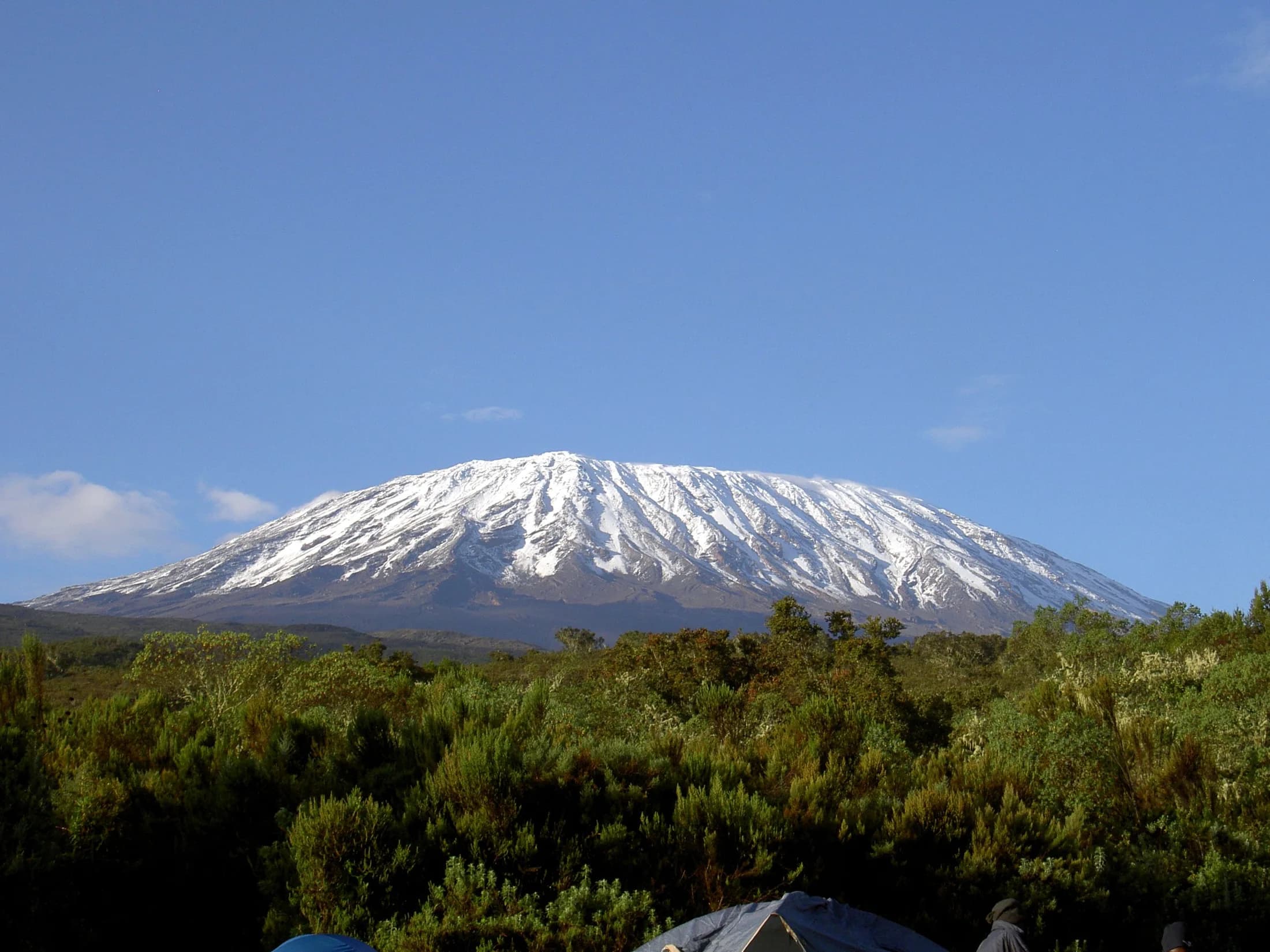
6-Day Marangu Route Kilimanjaro Climb
The Marangu hut route with an extra night at Horombo to let your body adapt.
About this safari
The Marangu hut route with an extra night at Horombo to let your body adapt. The added day noticeably improves the chance of reaching Uhuru Peak and makes summit night feel more manageable.
This 6 days private safari starts in Moshi and takes you to Two nights at Horombo for better acclimatisation, Walk to Zebra Rocks with views of Mawenzi, Hut accommodation the whole way, Uhuru Peak, the highest point in Africa. Your own vehicle and guide set the pace, and every stay and transfer is confirmed around your dates.
Safari snapshot
A quick look at the route, day by day.
| Day | Place | Highlights | Hotel options |
|---|---|---|---|
| Day 1 | Marangu Gate to Mandara Hut (2,720 m) | Game drives with your private guide | Mandara Hut (shared A-frame huts) |
| Day 2 | Mandara Hut to Horombo Hut (3,720 m) | Game drives with your private guide | Horombo Hut (shared huts) |
| Day 3 | Acclimatisation day at Horombo: Zebra Rocks | Game drives with your private guide | Horombo Hut (shared huts) |
| Day 4 | Horombo Hut to Kibo Hut (4,703 m) | Game drives with your private guide | Kibo Hut (bunk rooms) |
| Day 5 | Summit night: Uhuru Peak (5,895 m), down to Horombo | Game drives with your private guide | Horombo Hut (shared huts) |
| Day 6 | Horombo Hut to Marangu Gate and Moshi | Game drives with your private guide | Departure |
Ways to customise this trip
- Add a night in the bush, a cultural visit or a balloon flight
- Upgrade your stays or finish with beach time in Zanzibar
Route
- Day 1Mount Kilimanjaro
- Day 2Mount Kilimanjaro
- Day 3Mount Kilimanjaro
- Day 4Mount Kilimanjaro
- Day 5Mount Kilimanjaro
- Day 6Mount Kilimanjaro
Day by day
Here is how the days run. We can adjust the route around your dates and the pace you want.
1Day 1Marangu Gate to Mandara Hut (2,720 m)Mandara Hut (shared A-frame huts) / Lunch, Dinner
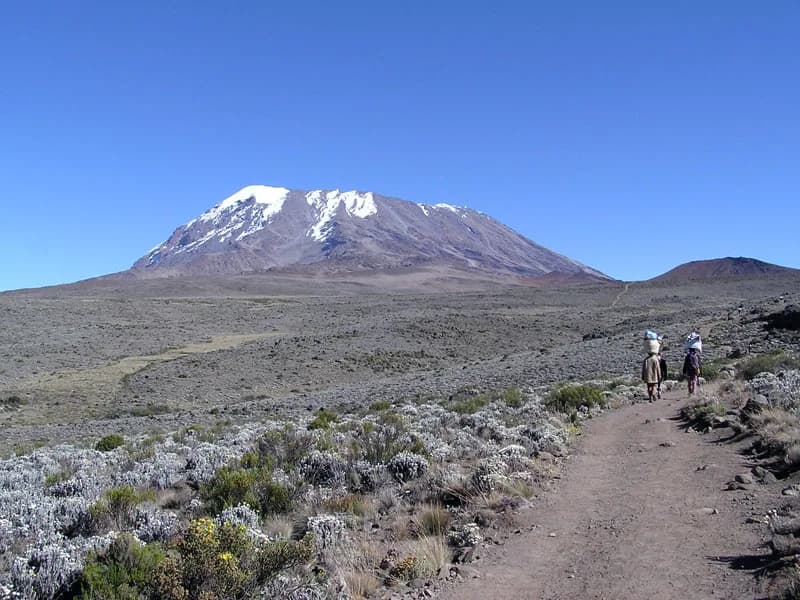
Pick-up in Moshi after breakfast and a one-hour drive to Marangu Gate (1,860 m) for registration and the porters' weigh-in. You then walk four to five hours on a well-made path through thick montane rainforest, with lunch on the way and a chance of seeing blue monkeys and colobus. At Mandara you are shown to your bunk in the wooden A-frame huts. In the late afternoon your guide takes you up to Maundi Crater, a short walk that helps acclimatisation and gives the first good view of the upper mountain. Dinner, a briefing and an early night.
- Main stop
- Mount Kilimanjaro
- Accommodation
- Mandara Hut (shared A-frame huts)
- Meals
- Lunch, Dinner
2Day 2Mandara Hut to Horombo Hut (3,720 m)Horombo Hut (shared huts) / Breakfast, Lunch, Dinner
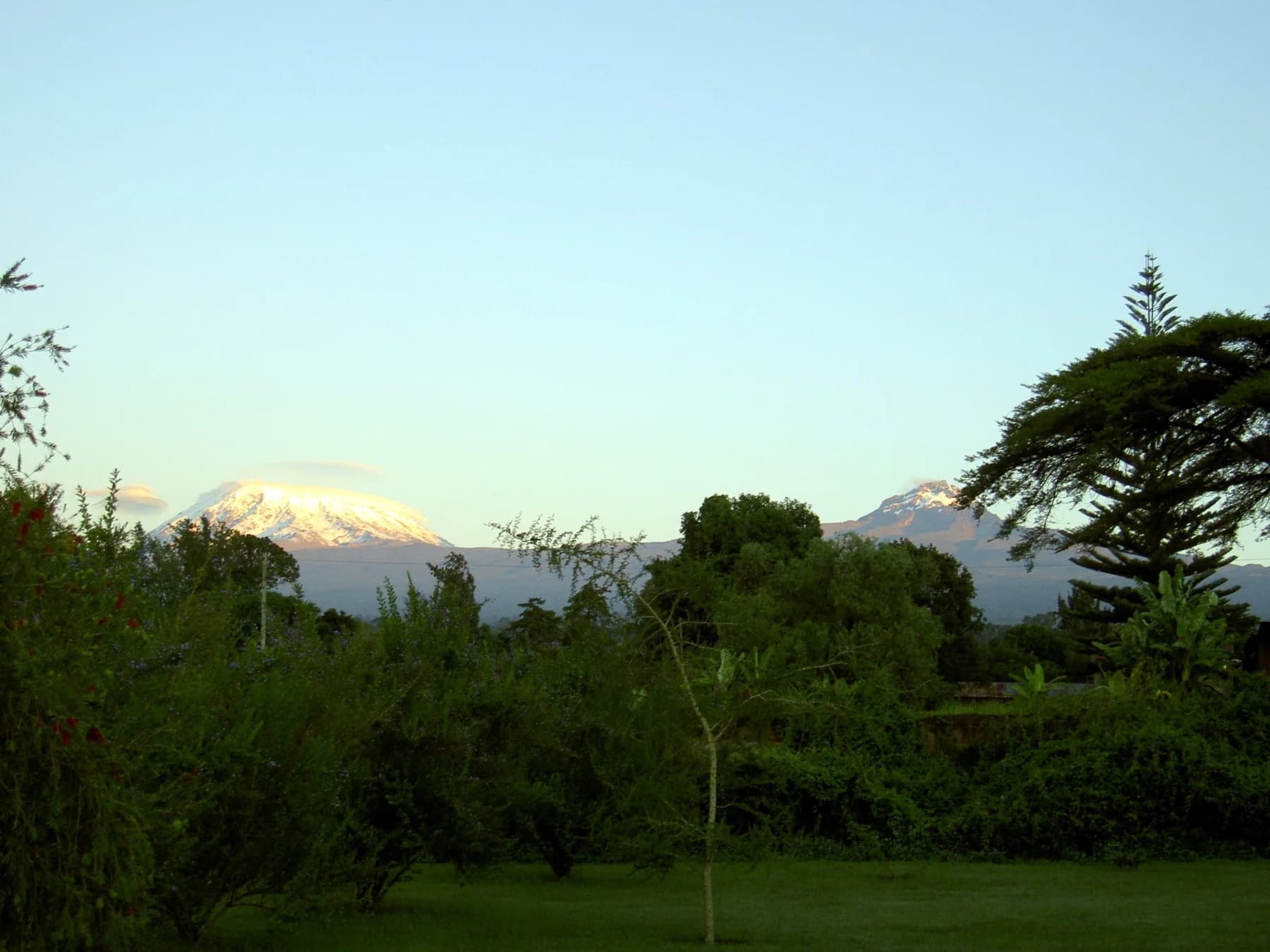
Leaving the forest, the trail crosses open heath and moorland where giant groundsels and lobelias grow taller than people. Expect six to seven hours of steady walking with Mawenzi and Kibo ahead of you and clouds often spreading out below. Lunch is on the trail. At Horombo you will share a hut with other climbers; the dining hut is warm and the views at sunset are some of the best on the mountain. Drink plenty, eat well even if your appetite drops, and tell your guide how you feel at the evening health check.
- Main stop
- Mount Kilimanjaro
- Accommodation
- Horombo Hut (shared huts)
- Meals
- Breakfast, Lunch, Dinner
3Day 3Acclimatisation day at Horombo: Zebra RocksHorombo Hut (shared huts) / Breakfast, Lunch, Dinner
This extra day is what sets the six-day climb apart. After a relaxed breakfast you hike for two to three hours up towards Zebra Rocks, black-and-white striped lava cliffs at around 4,000 m, then return to Horombo for lunch — the 'climb high, sleep low' principle that helps the body produce more red blood cells. Stronger walkers can continue towards the Mawenzi saddle with the guide's agreement. The afternoon is for rest, reading, sorting kit for the high camp and watching the light change on Kibo. Many climbers feel noticeably better by the evening.
- Main stop
- Mount Kilimanjaro
- Accommodation
- Horombo Hut (shared huts)
- Meals
- Breakfast, Lunch, Dinner
4Day 4Horombo Hut to Kibo Hut (4,703 m)Kibo Hut (bunk rooms) / Breakfast, Lunch, Dinner
A six- to seven-hour walk of about 10 km across the Saddle, the stony alpine desert between Mawenzi and Kibo. The gradient is easy but the altitude is not, so you keep a slow, even rhythm with regular water stops. You reach the stone buildings of Kibo Hut in the afternoon, have an early dinner and get your summit briefing. Prepare your layers, gloves, head torch and snacks, and rest until about 11 pm, when the crew wakes you with hot drinks.
- Main stop
- Mount Kilimanjaro
- Accommodation
- Kibo Hut (bunk rooms)
- Meals
- Breakfast, Lunch, Dinner
5Day 5Summit night: Uhuru Peak (5,895 m), down to HoromboHorombo Hut (shared huts) / Breakfast, Lunch, Dinner
Around midnight you start up the steep scree slope by head torch, passing Hans Meyer Cave and reaching Gillman's Point on the crater rim after six to seven hours, usually as the sun rises over Mawenzi. The final stretch around the rim to Uhuru Peak takes another one to two hours, with glaciers and the crater beside you. After summit photos you descend to Kibo Hut for a rest and a meal, then on down to Horombo for the night. Expect 12 to 15 hours on your feet — the guides carry oxygen and first aid and will turn anyone around who is unwell.
- Main stop
- Mount Kilimanjaro
- Accommodation
- Horombo Hut (shared huts)
- Meals
- Breakfast, Lunch, Dinner
6Day 6Horombo Hut to Marangu Gate and MoshiBreakfast, Lunch
Your last morning on the mountain. The descent through moorland and forest to Marangu Gate takes six to seven hours, and your legs will feel it. At the gate you collect your summit certificate and say thank you to the guides, cook and porters. A vehicle is waiting to take you back to Moshi or Arusha for a shower and a celebration dinner. Ask us to add a night at a lodge, a safari or a Zanzibar beach stay after the climb.
- Main stop
- Mount Kilimanjaro
- Meals
- Breakfast, Lunch
Accommodation
Where you stay on this trip. We can move the comfort level up or down when we plan your dates.
 Day 1Mandara Hut (shared A-frame huts)
 Days 2, 3, 5Horombo Hut (shared huts)
 Day 4Kibo Hut (bunk rooms)
Tour rates
Your price depends on your dates, group size and the stays you choose. We confirm it in writing once we have checked availability.
Prices are per person and assume shared rooms. Season, park fees, group size, flights and lodge availability all affect the final quote.
Get my exact quoteWhat’s included
Included
- Kilimanjaro National Park fees, camping or hut fees and rescue fees
- Professional mountain guide, assistant guides, cook and porters
- All meals on the mountain and treated drinking water
- Daily health checks with a pulse oximeter
- Transfers between Moshi or Arusha and the park gates
- Summit certificate
- Dormitory beds in the mountain huts
Not included
- International and domestic flights
- Hotel nights before and after the climb (we can add them)
- Sleeping bag and personal trekking gear (available to rent)
- Travel insurance covering trekking to 6,000 m
- Tips for the mountain crew
- Visa fees
Travellers who explored Tanzania with us
More tours
Kilimanjaro TrekPrivate journey5 Days5-Day Marangu Route Kilimanjaro Climb
- Own vehicle & guide
- Mid-range or luxury
The classic hut route to the Roof of Africa. Sleep in mountain huts rather than tents, climb through rainforest, moorland and alpine desert, and reach Uhuru Peak at 5,895 m on the fourth night.
- The only Kilimanjaro route with dormitory huts
- Maundi Crater viewpoint on the first afternoon
- The Saddle between Mawenzi and Kibo
Kilimanjaro TrekPrivate journey6 Days6-Day Machame Route Kilimanjaro Climb
- Own vehicle & guide
- Mid-range or luxury
The 'Whiskey Route' — Kilimanjaro's most varied camping route, crossing the Shira Plateau, climbing high to Lava Tower and scrambling up the Barranco Wall before the summit push from Barafu.
- The Barranco Wall scramble
- Five vegetation zones in six days
- Descent on the Mweka trail
Kilimanjaro TrekPrivate journey8 Days8-Day Lemosho Route Kilimanjaro Climb
- Own vehicle & guide
- Mid-range or luxury
Kilimanjaro's most beautiful and gradual route. Start on the quiet western side, cross the full Shira Plateau and give your body eight days to adapt before the summit — the best balance of scenery and success.
- Quiet start in the western rainforest
- Crossing the whole Shira Plateau
- Extra night at Karanga before Barafu
From the journal

A Foodie’s Guide to Forodhani Night Market
If you want to experience Zanzibar through its food, spend an evening at Forodhani Night Market in Stone Town.
Read guide
Behind the Scenes: How We Plan Your Perfect Itinerary
Discover expert tips and local insights about Behind the Scenes: How We Plan Your Perfect Itinerary with Lucky Wild Safaris. Read our full guide to start planning your dream Tanzanian adventure.
Read guide
Beyond Wildlife: The Hidden Gems of Tanzania
Discover expert tips and local insights about Beyond Wildlife: The Hidden Gems of Tanzania with Lucky Wild Safaris. Read our full guide to start planning your dream Tanzanian adventure.
Read guideFrequently asked questions
Can this 6 days itinerary be changed?
Yes. We can review your dates, daily pace, room preferences and interests, then build a specific proposal. Changes to flights, activities or park nights may affect cost and availability.
Which accommodation will I stay in?
Your proposal will name the properties and room categories for each night. Any stays shown here are planning options and remain subject to availability; alternative properties are agreed before confirmation.
What wildlife will we see?
Wildlife sightings depend on season, weather and the animals themselves. Your guide plans around local conditions, but particular species, migration movements and river crossings cannot be guaranteed.
Can I change the route and accommodation?
Yes. The published routes are starting points. Tell us your dates, interests and preferred comfort level so we can adjust nights, transfers and activities before quoting.
What determines the final price?
The travel season, number of travellers sharing a vehicle, park fees, room arrangements, lodge availability and domestic flights all affect cost. Your written proposal will identify inclusions and optional extras.
Can the safari finish in Zanzibar?
A mainland safari can connect with Zanzibar by a separately arranged domestic flight. Leave enough time for the transfer and confirm baggage allowances before booking flights.
When is the best time for a Tanzania safari?
Wildlife can be seen all year. June to October is dry, with animals gathering near water. January to March brings the calving season in the southern Serengeti. April and May are the long rains: greener, quieter and often better value. We match the parks and camps to the month you travel.
How many days do I need?
Two or three days suit Tarangire and Ngorongoro. Four to six days let you add the Serengeti without rushing, and seven or more give time for extra parks, a cultural visit or the coast. Fewer long drives usually means a better trip.
Is the safari private?
Our tailor-made safaris are private: your own vehicle and guide, and a daily pace set around your group. Shared departures can sometimes be arranged for solo travellers — ask us and we’ll explain the options.
What vehicle will we travel in?
Game drives are in a 4x4 safari vehicle with a pop-up roof for viewing and photography. Your proposal confirms the vehicle and seating for your group size.
Is a safari suitable for children?
Yes, with the right planning. We keep drives shorter, choose family-friendly rooms and build in rest time. Some camps and activities have minimum ages, so please share each child’s age when you enquire.
Can you cater for dietary needs?
Most lodges and camps can prepare vegetarian, vegan, gluten-free and other meals with notice. Tell us about allergies or requirements when you enquire and we’ll pass them to every property on your route.
Do I need vaccinations or malaria tablets?
Requirements depend on your nationality and recent travel, and a yellow fever certificate may be needed if you arrive from certain countries. Malaria precautions are generally advised. Please check with a travel health clinic before you go.
What should I budget for tips?
Tipping is not compulsory but is customary for guides and lodge staff. We include current guidance with your proposal so you can plan for it in advance.
Will there be Wi-Fi and charging?
Many lodges and camps offer charging points and some Wi-Fi, but the connection can be slow or limited to main areas in remote parks. A spare power bank is useful on game drives.
How far in advance should I book?
For July to October and the holiday season, three to nine months ahead gives the best choice of camps. Shorter notice is often possible — send us your dates and we’ll check availability.
A few details.
A good beginning.
Tell us who is coming and what you would love to find here. We’ll send back a route you can read, question and make your own.
- Planned around your dates and interests
- Midrange or luxury, at your pace
- A personal conversation with our local team